TAHPFMGO WORLD / APPLIED PERCEPTION / CONCEPT & TEST PROTOCOL
Surface-Layer Advantages: From Symbolic Viewing to Reflective Action
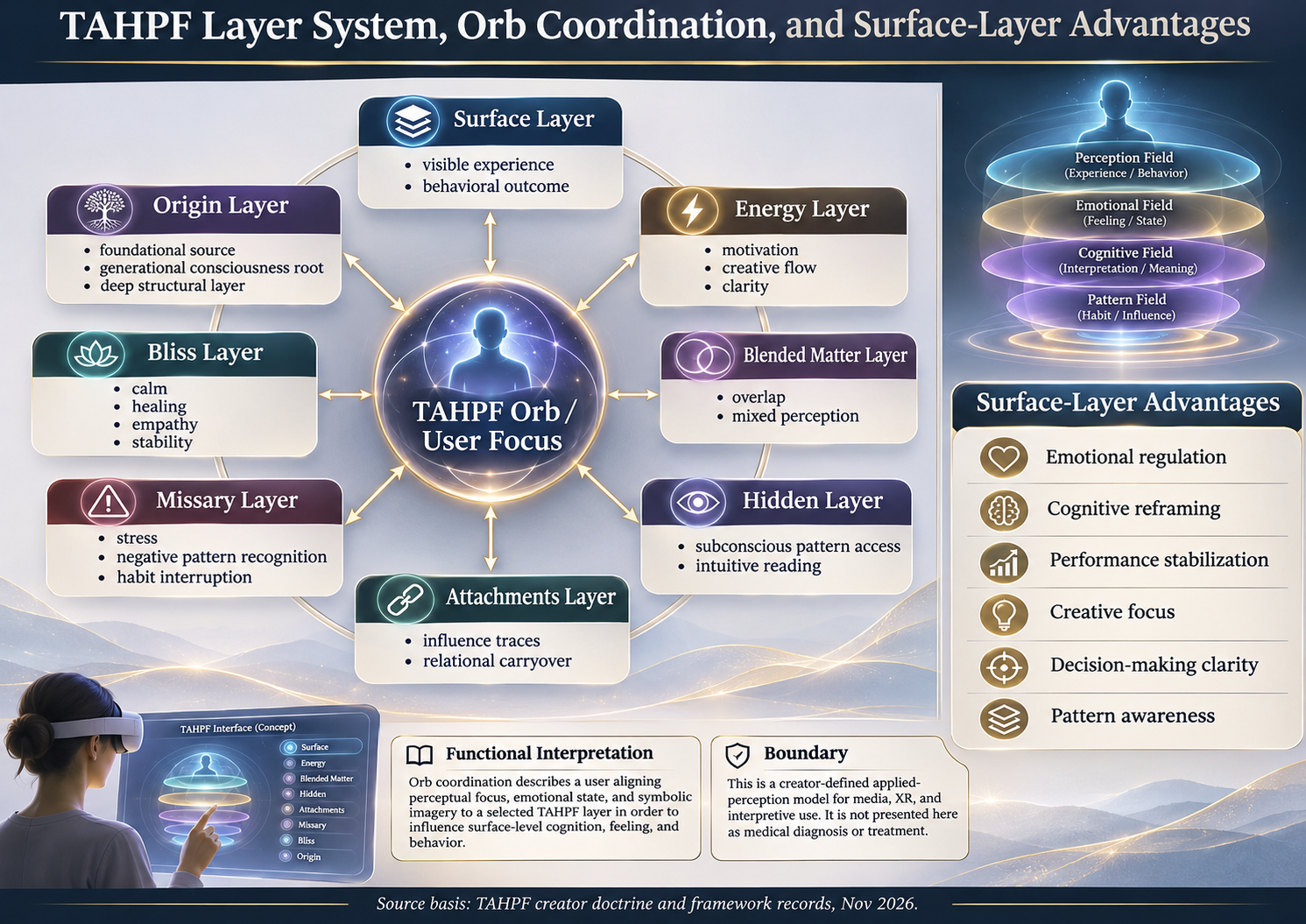
A TAHPF Orb is a creator-defined focus and interface metaphor. “Coordination” means choosing a TAHPF layer, directing attention to imagery or a question, and optionally recording a reflection before a real-world task. A possible surface-layer advantage is a better-informed action or self-reported experience that can be measured in a pilot. The system is not a brain-reading device, another physical realm, a therapy or a proven method of changing outcomes.
The eight interpretive categories
- Surface: the directly visible scene and observable real-world task.
- Energy: luminous imagery and a voluntary prompt about activation, motivation or creative attention—not a measured biological energy field.
- Blended Matter: overlaps and ambiguous contours, with an opportunity to compare multiple visual readings.
- Hidden: repeated patterns or unnoticed visual detail, not privileged access to another person’s subconscious.
- Attachments: interpreted connections and associations, not detected invisible influences.
- Misery / Missary: historical naming variants for a creator-defined difficult or conflict-laden interpretive category; not a trauma diagnosis.
- Bliss: peaceful or luminous imagery and self-reflection, not proven clinical healing.
- Origin: additional foundational or generational symbolism, an interpretive hypothesis rather than a verified substance.
Five practical scenarios with measurable outcomes
Scenario A — Preparing for a public presentation (Bliss)
Input: the participant voluntarily selects Bliss imagery. Interaction: 90 seconds of observation, names one feeling and one specific action (“pause before my first sentence”). Surface task: give a short presentation. Possible measures: self-reported calm before/after, time spent speaking, missed points and an optional observer rating. Claim boundary: a personal reflection exercise; no established anxiety treatment benefit.
Scenario B — Starting a creative project (Energy)
Input: choose the Energy category as a visual prompt. Interaction: list three possible ideas and select one. Surface task: complete a twenty-minute sketch or writing sprint. Possible measures: minutes engaged, drafts completed, perceived focus. Claim boundary: outcomes must be compared with an appropriate control condition before any performance claim.
Scenario C — Reframing an ambiguous scene (Hidden + Blended Matter)
Input: inspect the same ambiguous artifact in two approved views. Interaction: label observed pixels, plausible interpretations and unknowns in separate columns. Surface task: reconsider a difficult but non-clinical decision with at least two alternative explanations. Possible measure: number of distinct, evidence-supported alternatives considered. Claim boundary: this is reflective pattern practice, not access to secret memories or truth detection.
Scenario D — Acknowledging a recurring conflict (Attachments + Misery/Missary)
Input: choose a symbolic connection or conflict image voluntarily. Interaction: identify a remembered trigger, a response and a safer alternative without inferring that the picture detects a hidden cause. Surface task: plan one communication step. Possible measure: whether the participant completes their chosen step; no claim of trauma resolution or clinical efficacy.
Scenario E — A museum or classroom XR visit (Surface + Origin)
Input: visitor chooses the Surface image, then optional Origin interpretation. Interaction: toggle a source-bound comparison view and an explicitly marked narrative overlay. Surface task: discuss what changed in attention and meaning. Possible measure: interpretation diversity, source-versus-story discrimination and accessibility feedback. No overlay may be described as camera-captured evidence if invented.
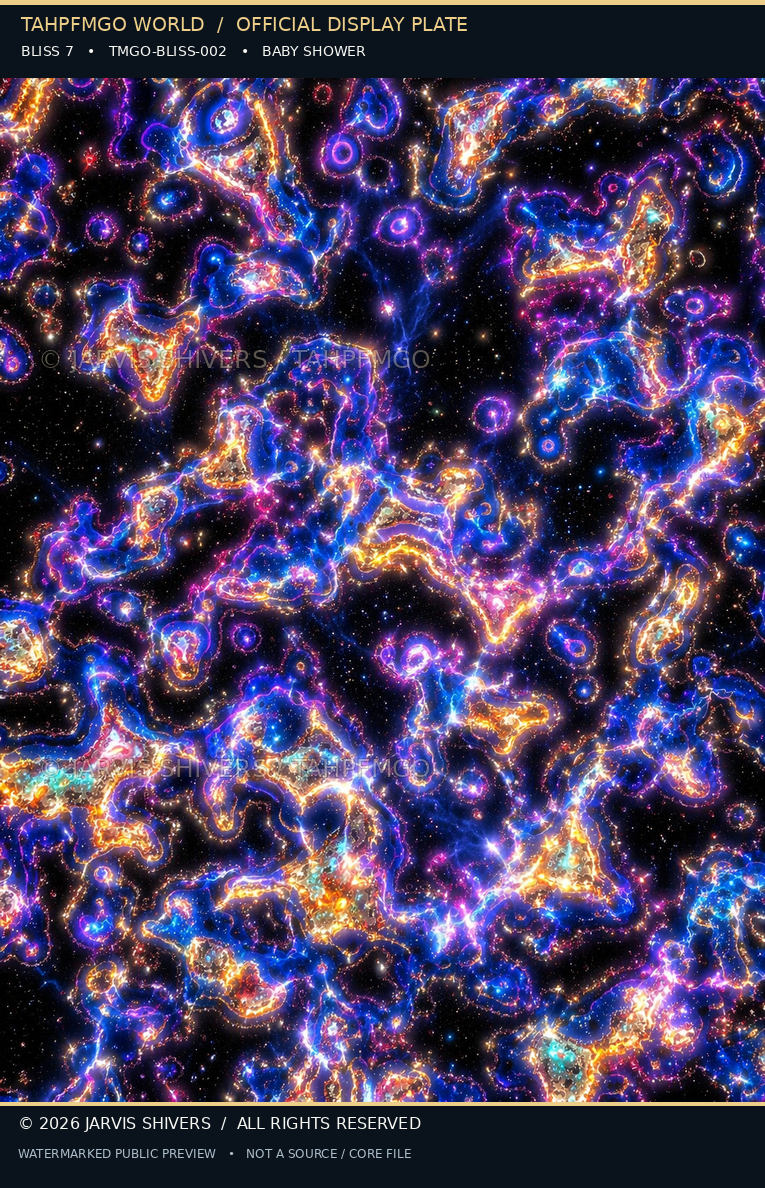
An example artwork, separate from proposed benefits
A safe, testable TAHPF Orb user journey
- 1. Choose: voluntarily select a layer and an approved image.
- 2. Observe: describe what is directly visible before interpreting it.
- 3. Interpret: record a personal symbolic or emotional association, clearly labeled as subjective.
- 4. Act: choose one ordinary real-world behavior under the user’s control.
- 5. Measure: log a simple outcome and compare it with no-layer or neutral-image sessions.
- 6. Reflect: allow no effect, unwanted effects and disagreement to be recorded honestly.
Future product possibilities and constraints
TAHPF glasses/XR: user-selected visible source images, layered comparisons and optional explanations; no claim to see objective emotions or invisible beings. TAHPF TV: creative visual storytelling for fictional characters or participant-supplied states, not unauthorized athlete or audience mind-reading. AuraTAHPF Live: reproducible settings, coordinate receipts and source-versus-interpretation switches are development goals requiring functioning builds and device-level evidence.
Privacy and safety: use opt-in self-reports, disclose generated narratives, avoid unconsented psychological profiles, avoid medical advice, and give users a way to turn off potentially upsetting imagery. The user should never be told a symbolic image objectively proves their health, ancestry, trauma or future.
Research and reference notes
Cognitive reappraisal is an established research topic, but that does not establish efficacy for TAHPF. See systematic review on reappraisal and emotional ambiguity. For immersive-interface design, see the W3C WebXR Device API. These are context references, not product validations.
Evidence statement: All advantages on this page are proposed uses, reflective goals or pilot outcome measures. No clinical efficacy, mind-reading ability, new physical dimension or guaranteed behavior change is asserted.
Primary source: TAHPF Official Definition and Framework Record v1.1. © 2026 Jarvis Shivers / TAHPFMGO World.

